

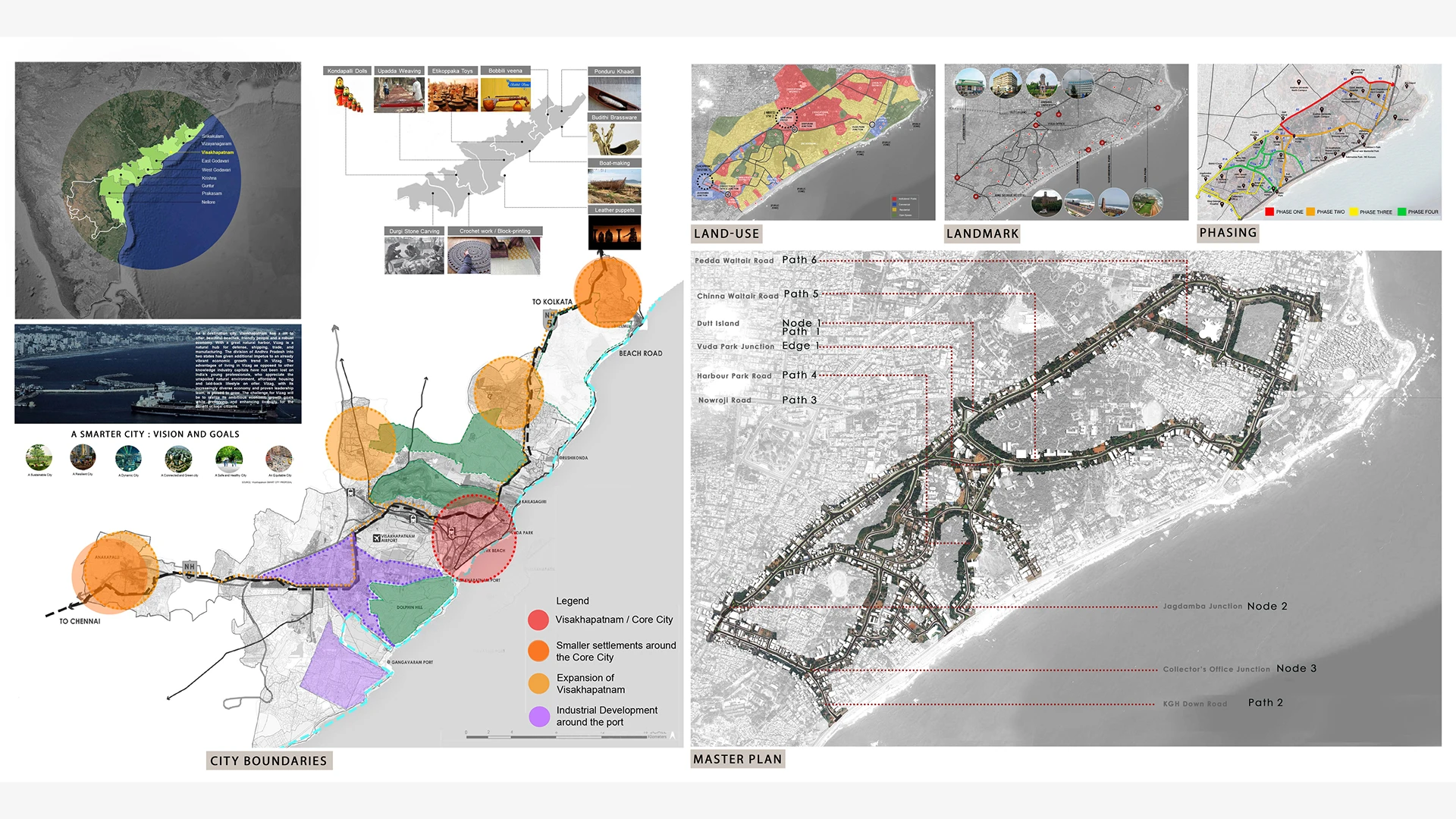
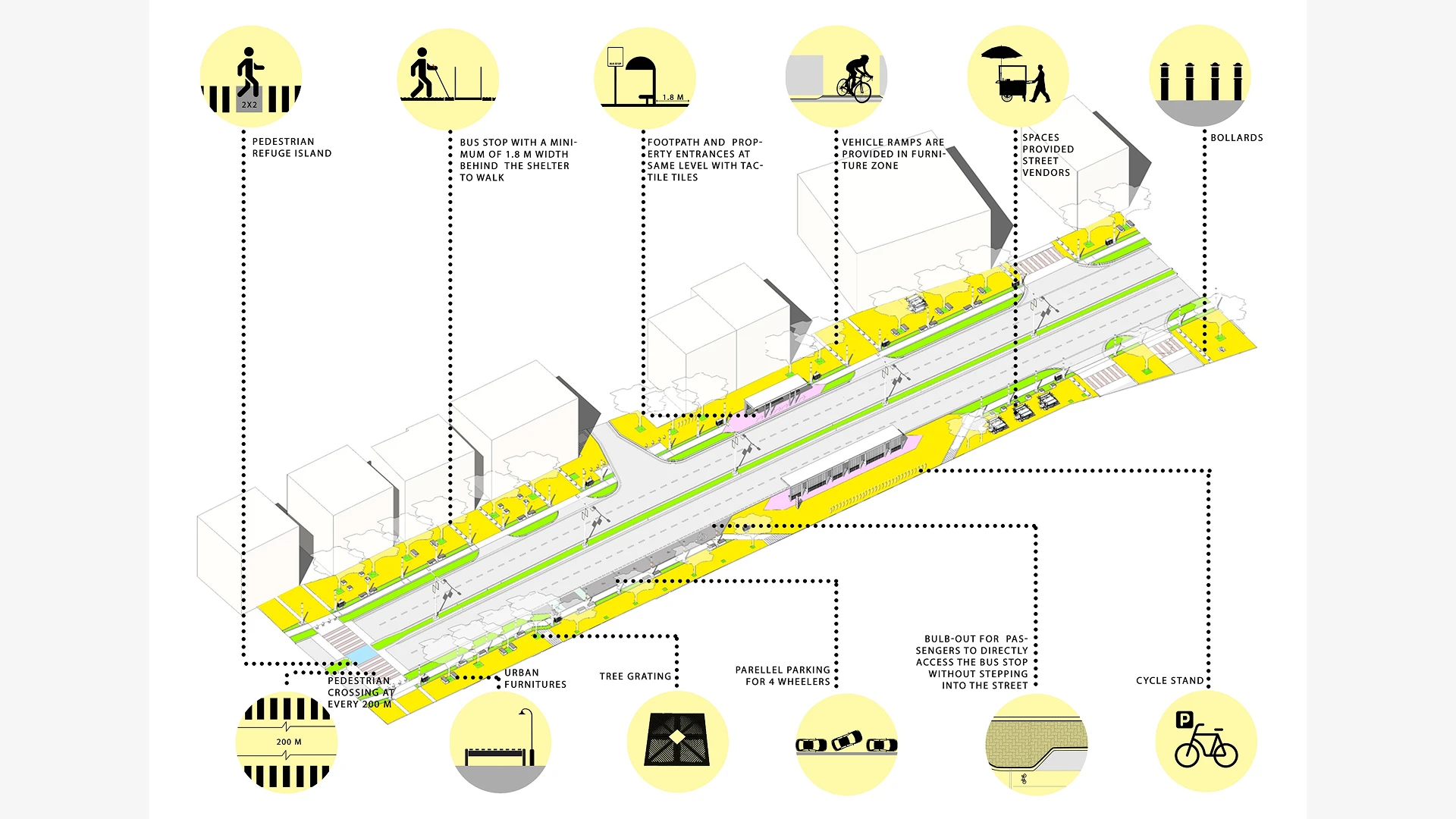
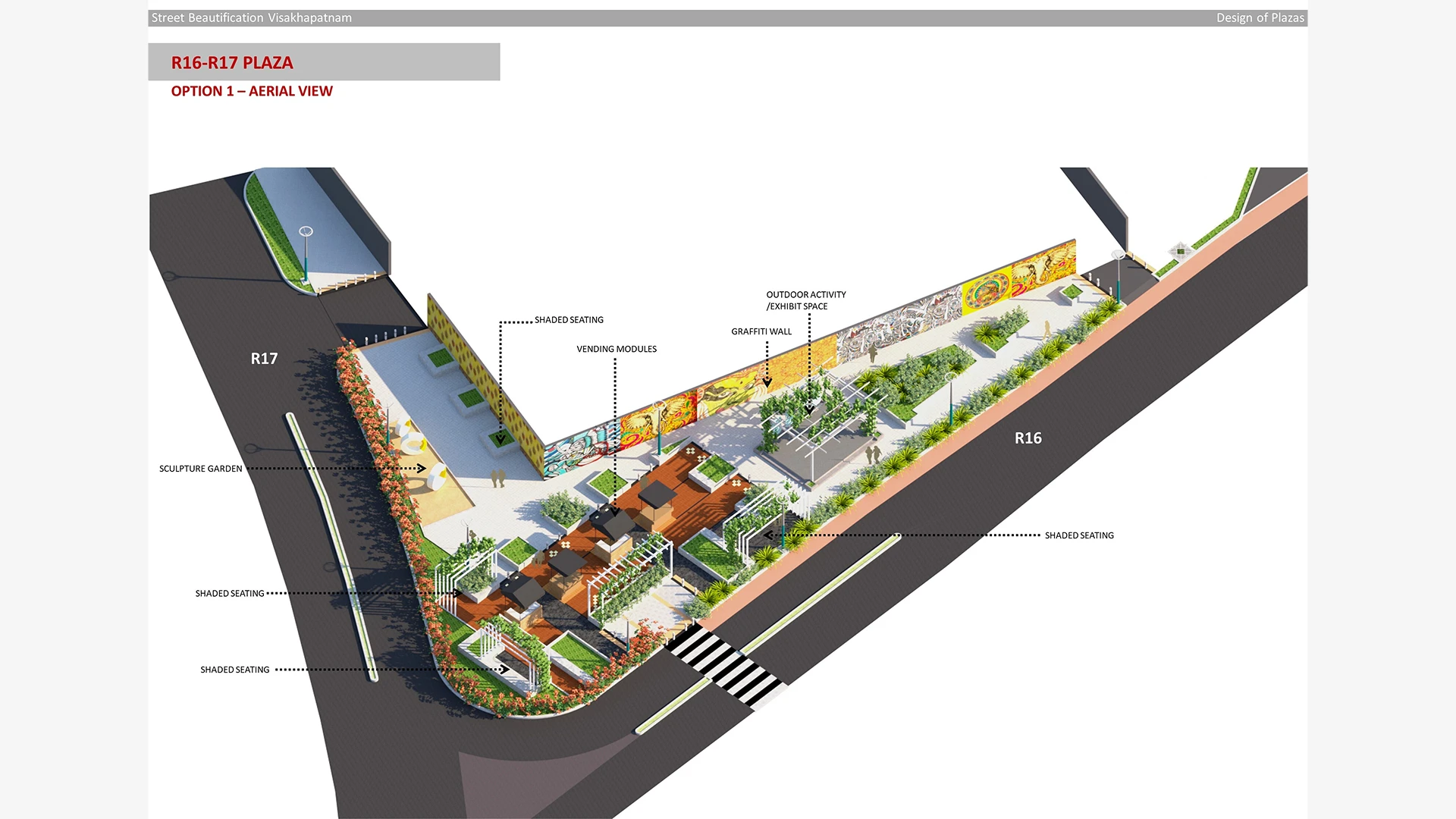
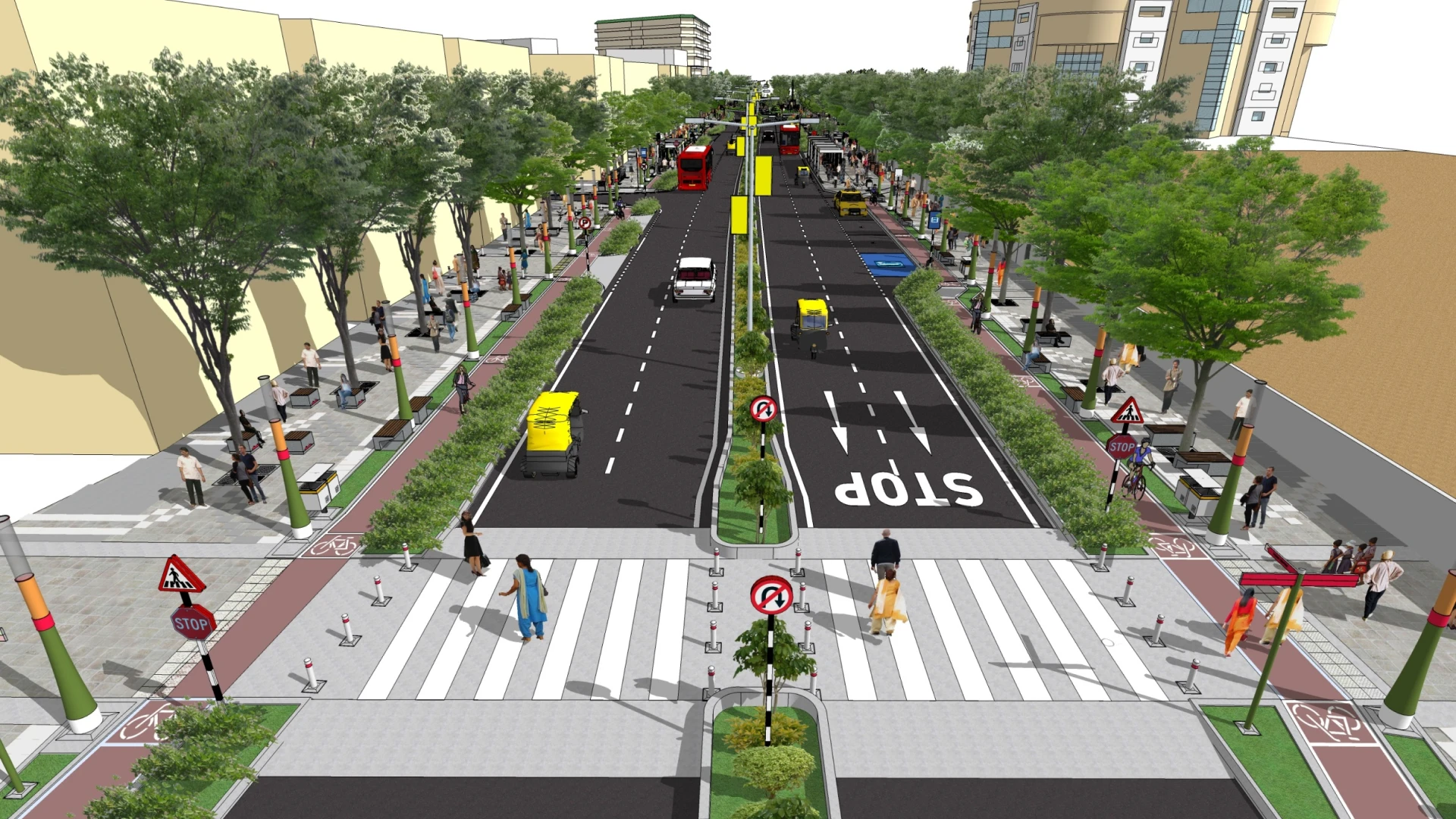
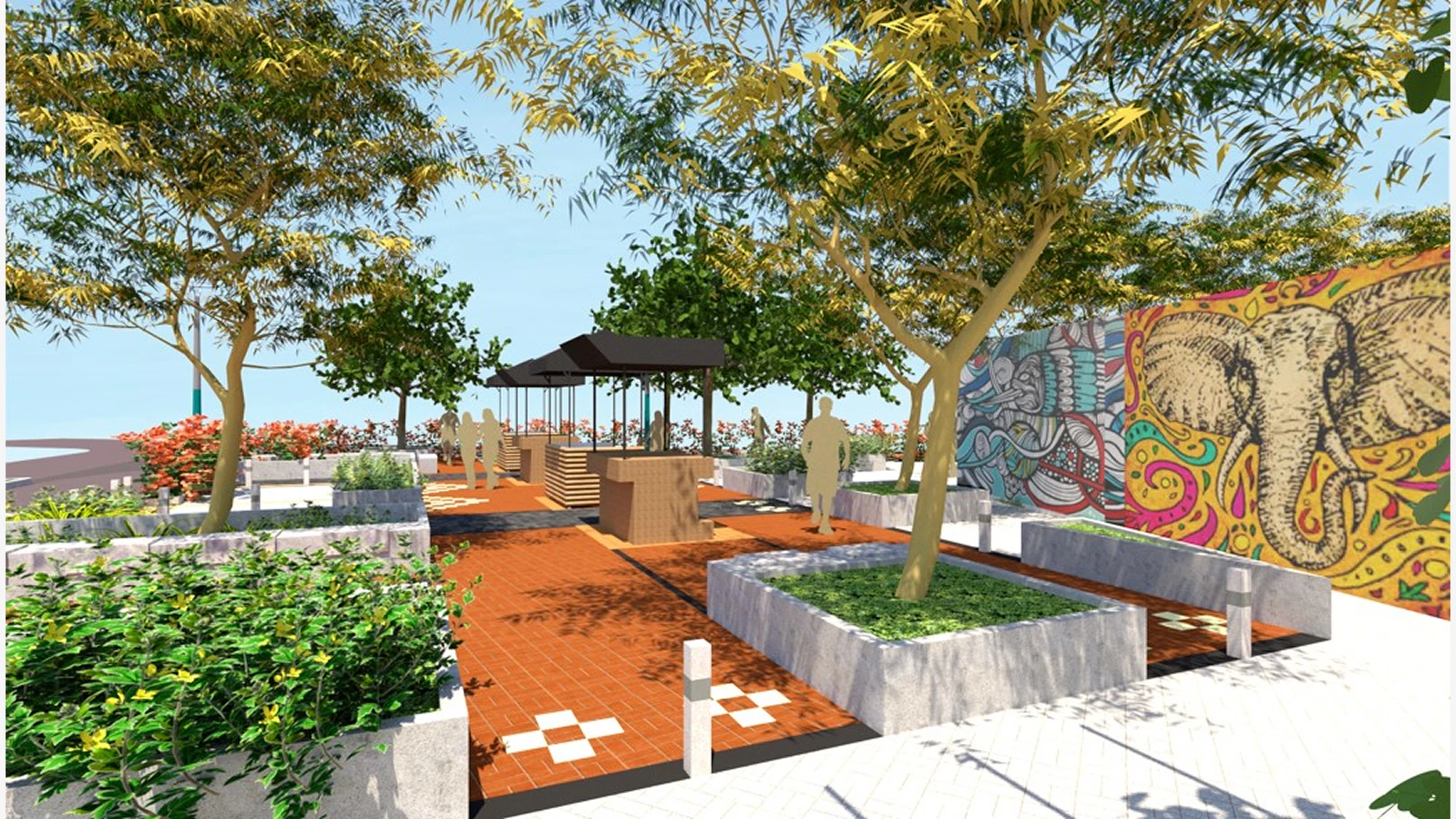
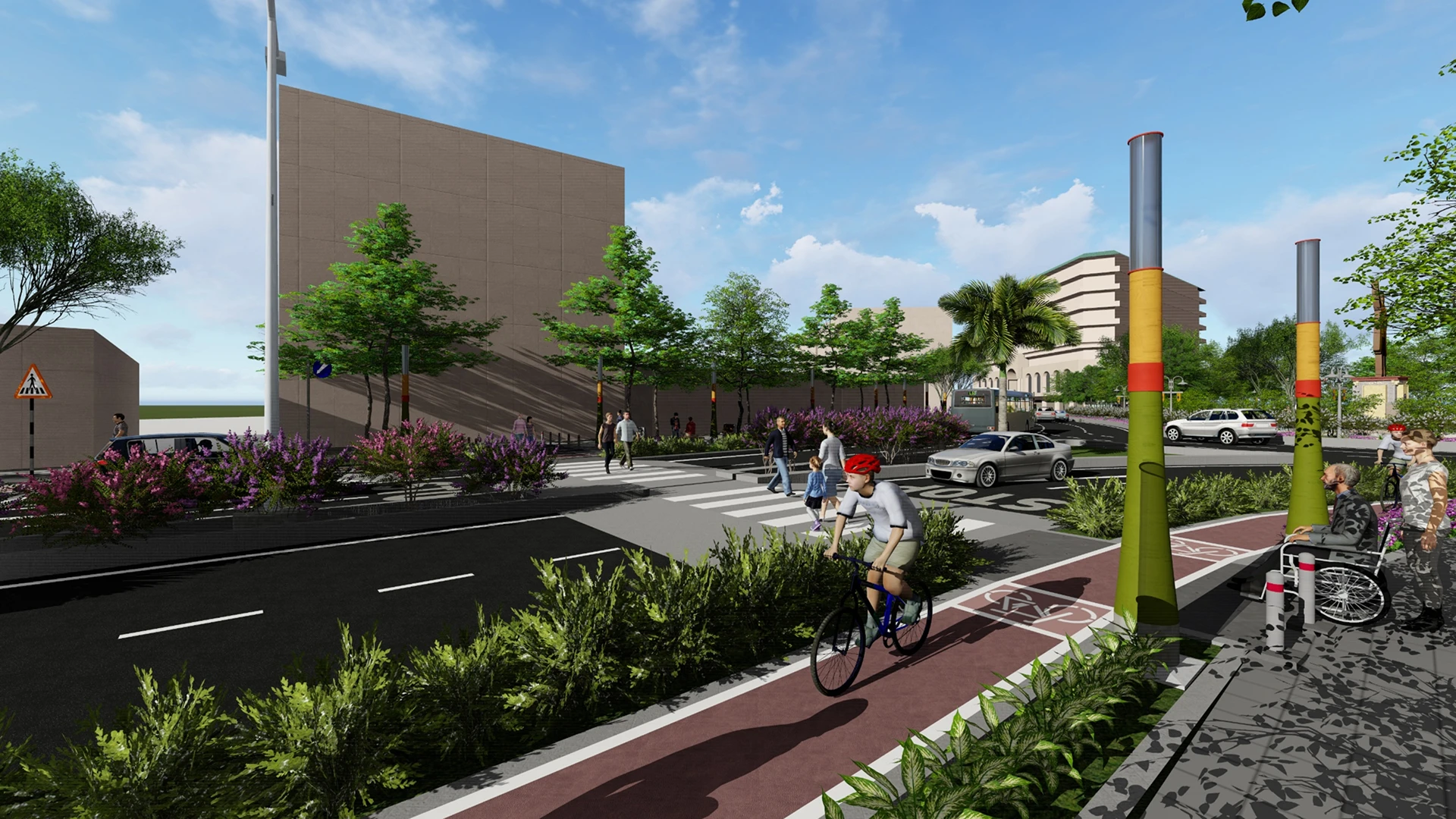
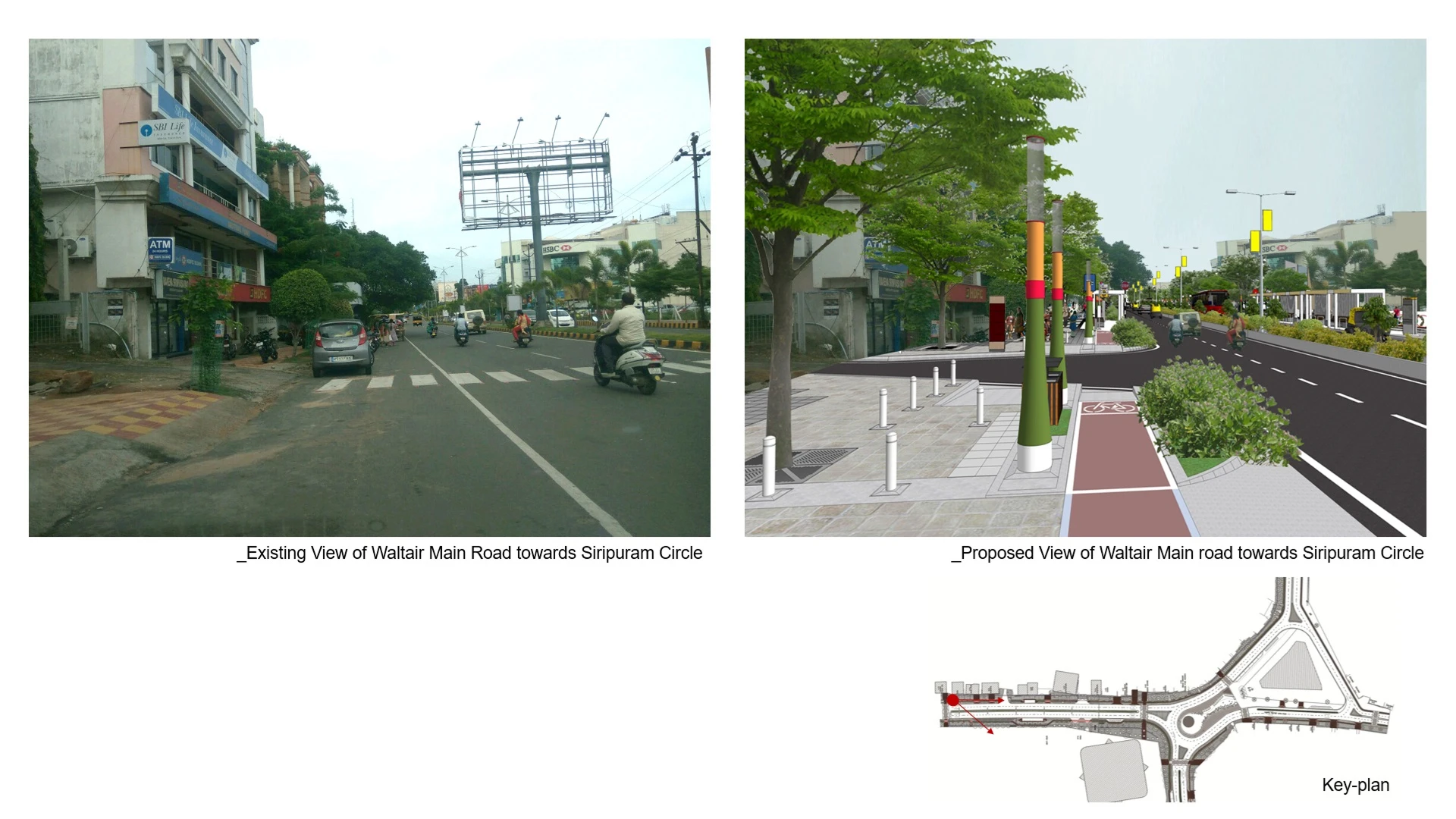
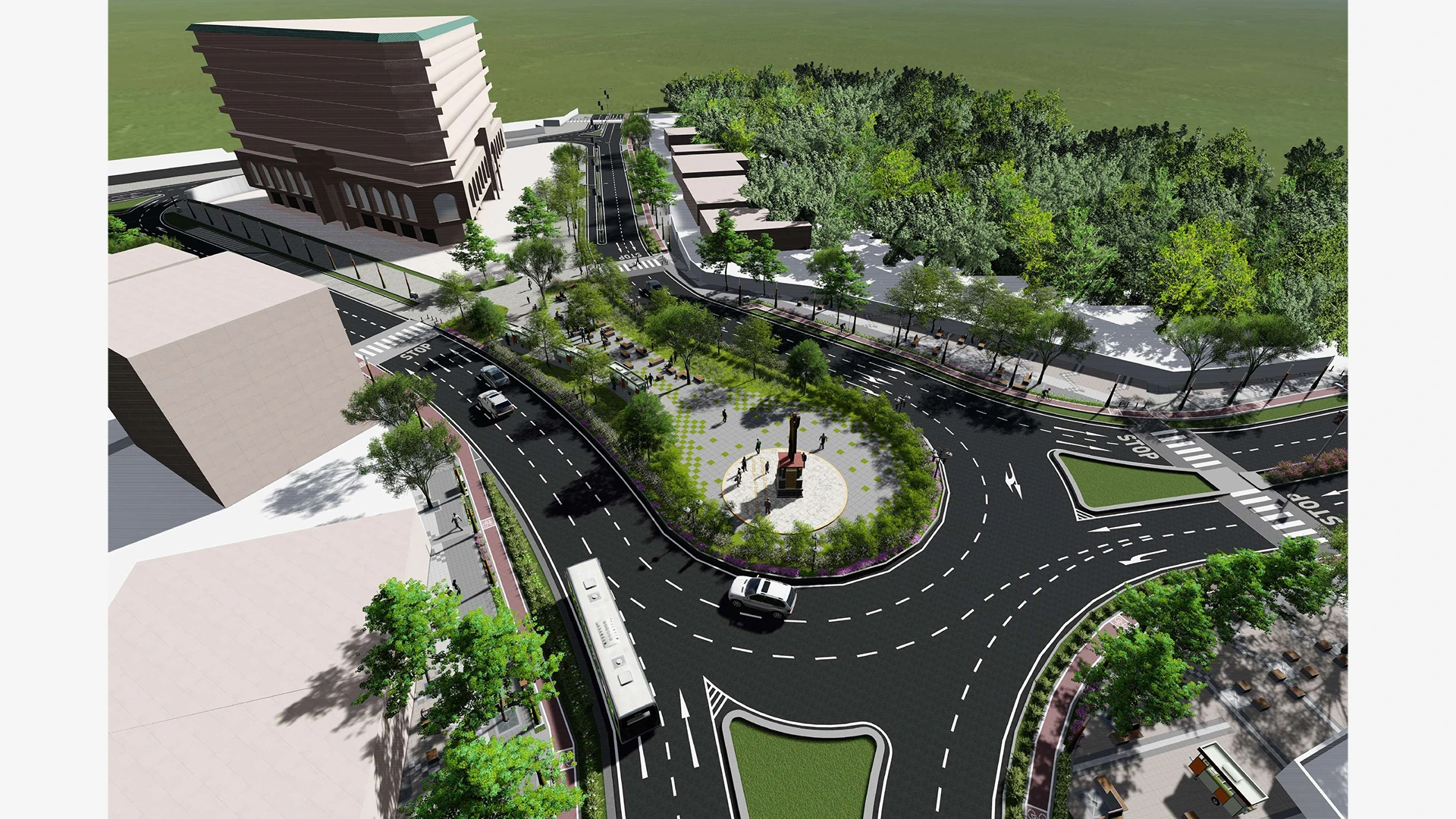
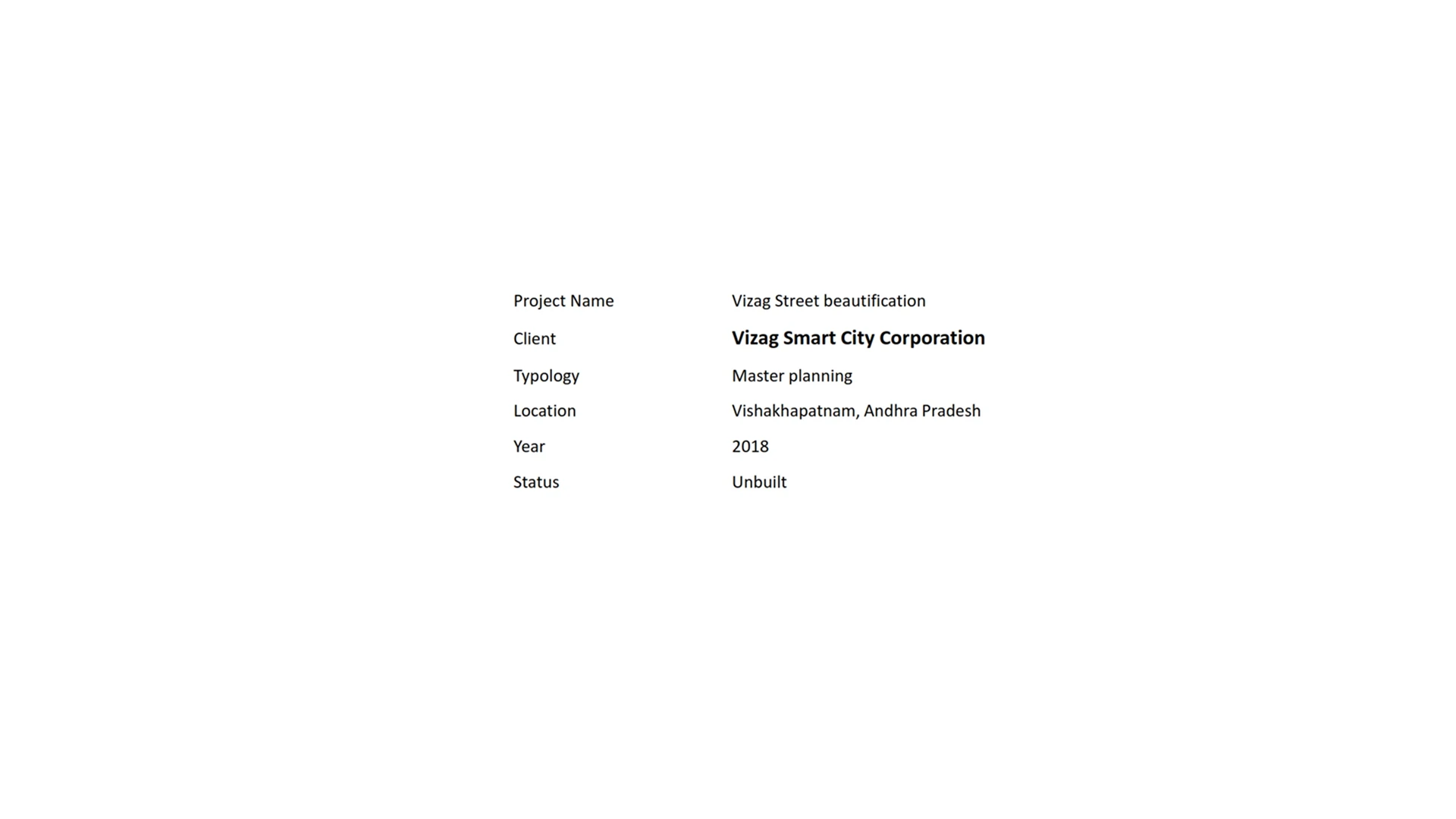


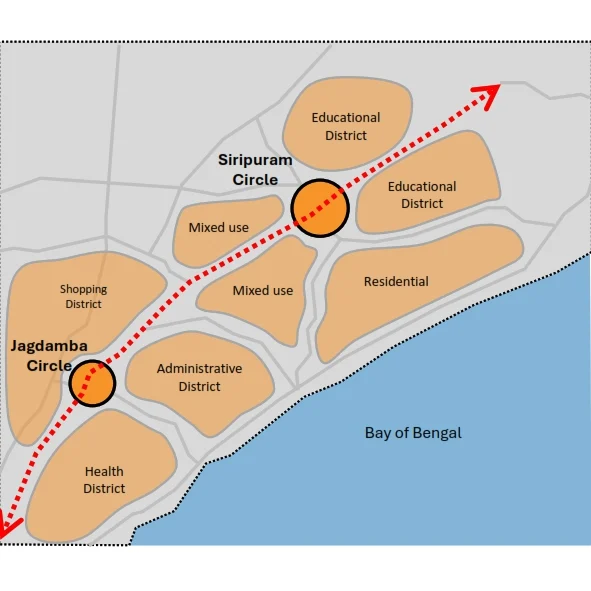
CnT Architects won the Vishakapatanam Street Beautification project in a invited design competition. The city beckoned a proposal for the beautification, design of the NMT (Non-Motorized Transit) infrastructure and branding of the streets. It would include streetscape design, landscaping and intersection redesign under Smart Cities Mission. Our design heeded to the city’s value for tourism as a port city, prominent health facilities and its cultural heritage as the main inspiration for aesthetics. Developing a strong street character, local to the city was pivotal in the project. The project also involved tackling the challenges of safe pedestrian walkways and formalizing carriageway widths. Thus, addressing the issues of zoning of the road, street furniture, unorganized parking and space for street vendors. The space for trees and utilities has been designated away from the path of the pedestrian traffic. The footpath zoning system has been followed across all the streets: divided into three main zones: the frontage zone, the pedestrian zone, and the furniture zone. “Complete streets” that make walking safe, comfortable, and convenient. The first challenge on the streets was to resolve safe pedestrian walkways and formalizing carriageway widths, while maintaining dedicated space for vendors . The major focus was shifted from just vehicular movement and there was equal distribution of focus to all elements that form an Indian street. The issue of unorganized parking, cluttering the road has been tackled through nuanced designs for the streetscape, the zoning of the road and the street furniture. Refuge islands in a mid-block crossing are provided in-between more than two lanes. Cycle tracks were imagined in line with PBS ( Public Bicycle Sharing ) project on the beach road and further development to promote cycling among the locals and strengthen the last mile connectivity. The space for trees and utilities has been designated away from the path of the pedestrian traffic. The footpath zoning system has been followed across all the streets: divided into three main zones: the frontage zone, the pedestrian zone, and the furniture zone. “Complete streets” that make walking safe, comfortable, and convenient . Street furniture: Seating, lighting poles, dustbins etc. has been designed to reflect the local aesthetics. Junctions and pedestrian plazas are redesigned to incorporate social activities, promote local culture and Spaces provided for local economic activities.
CnT Architects won the Vishakapatanam Street Beautification project in a invited design competition. The city beckoned a proposal for the beautification, design of the NMT (Non-Motorized Transit) infrastructure and branding of the streets. It would include streetscape design, landscaping and intersection redesign under Smart Cities Mission. Our design heeded to the city’s value for tourism as a port city, prominent health facilities and its cultural heritage as the main inspiration for aesthetics. Developing a strong street character, local to the city was pivotal in the project. The project also involved tackling the challenges of safe pedestrian walkways and formalizing carriageway widths. Thus, addressing the issues of zoning of the road, street furniture, unorganized parking and space for street vendors. The space for trees and utilities has been designated away from the path of the pedestrian traffic. The footpath zoning system has been followed across all the streets: divided into three main zones: the frontage zone, the pedestrian zone, and the furniture zone. “Complete streets” that make walking safe, comfortable, and convenient. The first challenge on the streets was to resolve safe pedestrian walkways and formalizing carriageway widths, while maintaining dedicated space for vendors . The major focus was shifted from just vehicular movement and there was equal distribution of focus to all elements that form an Indian street. The issue of unorganized parking, cluttering the road has been tackled through nuanced designs for the streetscape, the zoning of the road and the street furniture. Refuge islands in a mid-block crossing are provided in-between more than two lanes. Cycle tracks were imagined in line with PBS ( Public Bicycle Sharing ) project on the beach road and further development to promote cycling among the locals and strengthen the last mile connectivity. The space for trees and utilities has been designated away from the path of the pedestrian traffic. The footpath zoning system has been followed across all the streets: divided into three main zones: the frontage zone, the pedestrian zone, and the furniture zone. “Complete streets” that make walking safe, comfortable, and convenient . Street furniture: Seating, lighting poles, dustbins etc. has been designed to reflect the local aesthetics. Junctions and pedestrian plazas are redesigned to incorporate social activities, promote local culture and Spaces provided for local economic activities.


.svg)